Friday, May 10, 2013

Un-cleaning a Brainwashed Mind


(Applesauce, by Pat Cunningham;
(Rockford Register Star)
Prefatory Note: I wrote this before the November election. I didn't publish it because I didn't want to offend our friends. They're not offended.

We had a young friend over. His parents, old friends, were delivering him and a tailer full of his worldly goods to Boston. A recent Master of Communication, he has finished his education and is beginning his professional life as a business analyst at a consulting firm on Boylston Street. It sounds very posh.

Our young friend is tall (6' 3"), fit (he ripped off 20 chin-ups, no sweat), handsomely blonde, and with all the confidence befitting such a picture of potential success. There's no evidence of the former delinquent behavior that landed the teenaged version of this boy in juvy. He was never violent, and as far as we know, his crimes were of the underaged-drinking and driving and smoking pot variety. But these were severe enough to get him thrown out of his public high school and placed in some sort of local rehabilitation program.

Amazingly, the program, for whatever reason, worked. Instead of a drop out, unemployable, substance abuser, our old friends have a son to be proud of, a son whose academic prowess needed time to find productive focus, a son whose path took distinctly unhappy turns. Yet the family persevered and all came out the stronger for it.

It's an impressive, if bland, story of turning one's life around, if it weren't for a nagging detail. Our young friend is a Republican! When asked ironically if he enjoyed watching the GOP convention, he replied, "Yes!" with a bit too much enthusiasm. His parents are much like us in finding the current incarnation of the Republican Party thoughtlessly callous and calculatingly dishonest. Their son, believes the lies, supports the calumny, and fails to understand that simple-minded slogans and overly-simplistic, short-sighted ideas are no match for the complexities of real-world governance.

There was a particular lack of compassion in the young man's parroted arguments, right down to his underlying belief in the rightness of "greed" as a necessary ingredient for successful capitalism. The weak die off, the strong survive! If you're hungry enough, there are plenty of good jobs, and if you don't like what you're doing, you should find another job. It became evident that these old slogans of past disastrous policies sounded sensible to the callow youth.

There were two particularly bothersome issues fueling the young man's opinions. First, the ever-linked corollaries of taxes being too high and government spending out of control. Second, the belief that it's better to help businesses make more money than it is to help individuals lead more fulfilling lives. Somehow, we should all be able to pull ourselves up by our bootstraps; it's the all-American, freemarket way. There is no excuse for failure, and those who fail have no one to blame but themselves!

The obvious irony in this cruel viewpoint was missed. This is a young man who fell afoul of the system, but rather than discarding him as worthless, our society, through government-run, tax-supported institutions, gave the wayward youth help to mend his ways and opportunities to make the most of his talents. It sounds a bit too Horatio Alger to be credible, but the fearless young man we saw going off to undertake unknown professional trials, wouldn't exist without many years of publically-funded support, including community college and state-run college and University.

Why is it so difficult to see the greater good provided to society in general, and to our young friend in particular, of paying a graduated income tax? Paying taxes in no way limits greed, though it certainly makes the greediest feel resentment toward governments and the neediest. I understand this, but I still don't understand why it's okay to condone greed by lying, by ignoring the economic facts, and by concocting insupportable theories of prosperity, that amount to nothing more than an empty closet full of Emperor's New Clothes.

Despite my two-hour lecture on the history of taxes, the middle class, the Social Contract, Judeo-Christian morals, and the Apple versus Samsung decision, it seems unlikely that our blinkered young friend has in any way changed his mind. My hope is that he will begin to consider the ideas he accepts so readily with some skepticism. An ability to examine unsupported opinion under the light of factual data might even prove professionally useful to the young analyst.

On the other hand, faith is a powerful force, and no quantity of data can convince the faithful of any fallacy, no matter how overwhelming the evidence. Demagogs count on their faithful following, and the current Tea Party incarnation of the Republicans is particularly guilty of demagoguery. It would seem laughably stupid and naive if it weren't so scary.

Our friends seemed pleased that I was haranguing their golden boy, and I felt their support for my points. Clearly, they had tried to do the same, and with many of the same arguments and much the same result. Katharine asked me if I held out any hope, as if we were speaking of a sailor missing at sea. I've never experienced a missionary moment, where a poor heathen puts down his totem and joins the one true faith, but I continue to argue, cajole, badger, and ridicule the hopelessly misguided. I like to think that there will be some longer-term positive effect. That somehow, our young friend has been nudged toward a more thoughtful and compassionate view of his fellow humans.

But what should I do about my former colleagues and various casual acquaintances who declare their support for Romney and the Republican platform of social injustice and democratic regression on Facebook? There's no longer a convenient thumbs-down icon or Dislike button for me to register my protest. Is it wrong to do nothing? I wonder what The Ethicist would say?


Why Do We Like Being Mislead?

"This 24-Year-Old Entrepreneur Raised $300,000 By Wearing Dad’s Wool Shirt For 100 Days"

Professor Walrus Wonders Why This Headline Is Successful, When It's Actually Inaccurate and Misleading >

It worked on me, this attention-grabbing headline. I read the story. Not a bad story, but not the story I was expecting, and this bothered me.

The headline has two equal thrusts: 24-year-old entrepreneur raises $300,000 on Kickstarter, which is impressive, but not special. Second, he publicizes the campaign by wearing his Dad's old, presumably smelly shirt for 100 days. Now that's a compelling! We love people who are willing to make fools of themselves, but I suspect we're the ones being made fools of.

I got the story from the Co.Exist Daily newsletter. The 15-word headline packs a lot of information, and I wear wool shirts and have a 24-year-old. As it turns out, the lede is basically correct, but intentionally misleading. What's wrong with it:
  1. The headline accompanies a picture of a slim young man wearing a button-down, tattersall, wool shirt, presumably the one in question. However, it's not a picture of "this 24-Year-Old Entrepreneur, Mac Bishop;" it's a model.
  2. Dad never wore "Dad's Wool Shirt." He manufactured it. Bishop's father is the 5th-generation owner of Pendleton Mills in OR, which controls "85% of the American wool button-down market" and is where the shirt is made.
  3. Wool & Prince, Mac Bishop's Kickstarter-funded startup, exists, because the family turned down the idea. His father's shirt remains the heavyweight, durable, slightly scratchy, lumberjack standard. This is really the son's shirt, lighter weight, more-stylishly cut, much more appropriate for the Kickstarter crowd than the aging, woodsy set (of which this walrus admits to being a member).
If Bishop senior had decided to market his son's shirt, do you think he would have been written up in newspapers, profiled on NPR, and mentioned in Jay Leno's monologue? Not likely. 

But let's not take anything away from the ambitious, younger Mr. Bishop. As a crowd-funded entrepreneur, he seems to be doing everything right. With Wool & Prince, Bishop can rebrand his updated Pendleton shirt and hit just the right markets. It's no wonder he was able to attract so much positive attention and funding, and that's really what this story should be about—good product, great marketing, people want to wear his shirt and are willing to pay money for it.
What about the misleading blog headline? Take your pick:
  • Scratchy Wool Shirt Finds Kickstarter Fountain-of-Youth On the Back of 24-Year-Old Entrepreneur (16 words)
  • This 24-Year-Old Entrepreneur Raised $300,000 By Wearing Dad’s Wool Shirt For 100 Days (15 words)
  • One Wool Shirt, 100-Day's Wear, Washed in Kickstarter, Comes Out Smelling Like $300,000 (14 words)
  • There's Something About The Pendleton Men. Is it the Shirt Worn 100 days? (13 words)
  • Worn 100 Days, the Shirt Makes the Entrepreneur and $300,000 on Kickstarter (12 words)
Postscriptum: It's not a bad article, and I like the slide show with captions at the top of the story. I'd edit it differently and it could be funnier if it were tighter, but I ended up liking the shirt. If it came in Walrus, I'd buy one. I've included the Newsletter teaser to the article, below.
 NewImage

This 24-Year-Old Entrepreneur Raised $300,000 By Wearing Dad’s Wool Shirt For 100 Days


Mac Bishop’s Kickstarter for a miracle wool shirt that doesn’t need to be washed exploded across the Internet. But what you didn’t hear was that Bishop’s dad’s company is the country’s largest wool shirt manufacturer. And you can buy that miracle shirt today--no Kickstarter required.

Thursday, March 14, 2013

Google's Happy Face

Yesterday's Official Google Blog explained the end for eight "features of services" in terms that brought to mind the doublespeak of George Orwell's, 1984! In fact, there are good reasons why Google should jettison some of its thousands of projects—"Open the pod bay doors, Hal." But before I fall into a black hole of dystopian revery, let's examine Google's statement, beginning with the introduction: 

We’re living in a new kind of computing environment. Everyone has a device, sometimes multiple devices. It’s been a long time since we have had this rate of change—it probably hasn’t happened since the birth of personal computing 40 years ago. To make the most of these opportunities, we need to focus—otherwise we spread ourselves too thin and lack impact. So today we’re announcing some more closures, bringing the total to 70 features or services closed since our spring cleaning began in 2011:
Skipping ahead to the end, the responsible person is listed thusly:
Posted by Urs Hölzle, SVP Technical Infrastructure and Google Fellow
Am I the only one who finds this explanation ingenuous? The first three sentences are pure bloviation! How does one live in a "computing environment?" And where does Google get off claiming that we haven't seen this rate of change "since the birth of personal computing," which was really more like 35 years ago. 1984, the Orwellian year when Apple introduced the Macintosh, was only 29 years ago. You'd think Google, king of data, could supply a graph showing the rate of change in computing over the past 40 years. I'm guessing it's a fairly straight upward-pointing line, which as a graph of rate, would indicate exponential growth.

Next, SVP Hölzle, with no segue, we get the following, which I've converted into algebraic notation for your convenience:
"new kind of computing environment" = "these opportunities" = "we need to focus"
From which we draw the logical(?) conclusion:
"otherwise we spread ourselves too thin and lack impact"
Or more (or less) precisely:
If "new environment" then ("opportunity" and "need to focus") else ("spread thin" and "lack impact")
What's wrong with this logical statement, it appears to make semantic sense? Unfortunately, semantic sense doesn't necessarily yield good sense. For instance, this new kind of computing environment; what is it? Most simply, it's mobile—mobile devices, ubiquitous services, data access from anywhere. Even before the ubiquity of mobile devices, Google existed in the ubiquitous-services/data-access-from-anywhere universe—it's services are Web-based.

New for Google has more to do with the competitive, rather than computing, environment. As a mobile device and operating system provider, Google is in the thick of the most competitive, rapidly-changing market since… (choose whatever you like, because I can't think of a good comparison).

In addition to the changing competitive landscape is the changing landscape within Google, itself. I don't pretend to know what these changes really are, but we can't get some sense from this little example of software amputation couched in terms of positive growth. One of the most exciting aspects of Google has been its willingness to attack just about any problem. Inevitably, this has led to a huge number of projects of various degrees of quality, usefulness, and success. This is all the explanation they need for an everlasting string of spring cleanings!

Things change. This is neither surprising nor remarkable. Yesterday's clever hack becomes today's useless garbage—out with the old, in with the new. It doesn't take a Senior Vice President of Technical Infrastructure and Google Fellow to tell us this obvious fact. But in this new kind of competitive environment, Google somehow feels the need to obfuscate the obvious and ordinary. Pity.

In conclusion, I give you Professor Walrus's 4 Black Holes of Marketing Doublespeak:
  1. Bad news is an unmeasurable opportunity for…
  2. Senior executives poccess unquestionable farsightedness into a past that never really existed.
  3. Trust us. We're sorry we cut off your toe, but we promise to grow you a new one better than the first.
  4. You agree to believe everything we've told you and then forget that we ever said these things.

Sunday, October 7, 2012


NOOK Media LLC—The Ill-Begotten or Isogamy for the Rest of Us
Who wants to buy a bookstore? You remember what a bookstore is; a place you enter to purchase handheld content items, formerly known as "books!" Durable, reusable, occasionally beautiful objects existing for several centuries of human history. Fortunately, bookstores haven't quite reached dinosaur status, but the last and largest of the giant thunder lizards, Barnes & Noble, has been thrashing mightily in this new climate of digital reading and publishing.

And since none of the fleeter mammals on the ePublishing planet were interested in coming close to Tyrannosaurus Nookus, the choice seemed to be death in a bricks and mortar tar pit, or an ungodly union with some other mighty being. This latter window of hope has arrived in the form of Brontosaurus Microsoftus, and thus, full-blown from the heads of old gods, NOOK Media LLC is born.

Forevermore, let this creature be known as a Barnes & Noble subsidiary in a strategic partnership with Microsoft. For a paltry dowry of $300 million, Microsoft acquires a 17.6% genetic equity stake. No mention of visitation rights for the child stated in its birth announcement.

NOOK Media LLC begins life with the burden of its DNA in the form of Windows 8, to be launched on October 29th, just in time for Halloween. The spin:

  • B&N Nook is a "leader in the emerging digital reading and digital education market," a provider of "world-class digital reading experiences." Does "world-class" refer to a multi-language reading experience? 

Even more impressively(?), "NOOK Media is a leader in developing the next generation of digital reading Windows 8 devices," How do you get to be a leader of anything on the day of your birth? And furthermore, there are as yet no Windows 8 devices, so I suppose we're speaking of the life of the unborn. Not a problem, I can accept that as the premise for a $300 million investment.

And Windows 8, where is it coming from? Its progenitor is the Windows Phone 7 Series, which replaced 9 generations of Windows Mobile Computing and quickly became Windows Phone 7 and then Windows Phone 7.5. The burning question, "Which version of Windows Phone do I have?", is the #1 How-to Basic at WindowsPhone.com. My answer, if you need to ask, better off slinking back into your cave until Spring arrives.

But so many people love their Windows phones. Our ever vigilant friends at Gartner report something between a 1% and 2% marketshare for WindowsPhone devices, and about three million sold over a 6-month period. For perspective, there were five million iPhone 5s sold in the first weekend they were available.

On the other hand, perhaps Apple's time has run out, and Google's, too. Obviously, the canny business minds at B&N and Microsoft have ample evidence of pent-up demand waiting to burst forth and purchase Windows Phone 8 devices. Maybe, but then what does this paragraph from Wikipedia's Windows Phone entry mean?

  • The low market share of Windows Phone might be explained by a study by Bernstein Research that concluded that consumers don’t want Windows Phones. The research points out: "The lack of consumer interest for Windows-based phones has been very consistent in marketing surveys we have carried out across the globe over the last several years." and that "The situation of Windows in mobile phones is now very unlikely to revert."

I'm reminded of the movie, "Rosemary's Baby," which was actually a book by Ira Levin that you could buy in bookstores. The poor actor sells his first-born to the devil in return for the starring role in a Broadway play, and his wife, Mia Farrow, gives birth to a little devil. I think this is every mother's worst fear. "What if my child turns out to be a little devil?"

In the case of NOOK Media LLC, I don't think there's anything to worry about, because this is the offspring of two fathers—two male gametes uniting to form a single zygote. Not to worry, this sort of thing happens. Back to Wikipedia:

  • Isogamy is the state of gametes from both sexes being the same size and shape, and given arbitrary designators for mating type. 

So there's hope, but what form this isogamous corporate being with arbitrary designators might assume is yet to be determined. If it becomes viral and threatens all of mankind, we'll be left with no alternative but to ask "will it blend?"

-Professor Walrus

Wednesday, September 19, 2012

When Bigger is Biggest—Big New iPhone 5


iPhone 5, The biggest thing to happen to iPhone since iPhone.

It's not quite the grammatical gauntlet Apple threw down with "Think Different," but the iPhone 5 slogan still achieves a puzzling lack of syntactical precision. No matter that the next biggest thing is also the first big thing, but bigger, there are plenty of reasons to want one.

Here's Apple PR's one-line summary of new big things:

"Apple Introduces iPhone 5
Thinnest, Lightest iPhone Ever Features All-New Aluminum Design, Stunning 4-Inch Retina Display, A6 Chip & Ultrafast Wireless."

That's six comparatively bigger things: thinner, lighter, newer design, bigger display, faster A6 processor, faster wireless.

Here's my list of new iPhone 5 things:

1. New body is bigger, lighter, and thinner;
2. New display is longer*, clearer, and the colors more accurate;
3. New Lightning connector* is smaller, all digital, more durable, and reversible;
4. New A6 processor is 2x faster, 22% smaller;
5. New dynamic antenna;
6. New Wi-Fi with 2.4ghz and 5ghz on 802.11n;
7. New HSPA+, DC-HSDPA, and LTE added;
8. New battery lasts longer, 8-10 hours of use;
9. New iSight camera with sapphire lens is smaller, sharper, quieter, clearer, more dynamic, more precise, it's 8 mp, and it has panorama mode;
10. New FaceTime over cellular, take photos while shooting video, and both video stability and face detection improved;
11. New 3-microphone design—bottom, front, and back;
12. New speaker design with smaller five magnetic transducer, sideband audio, and noise-canceling earpiece;
13. and with new iOS6, but that's another story.

It's worth noting that this is the
* First screen-size change since the original iPhone, 2008
* First connector update since the original iPod 30-pin connector, 2003

And probably just as importantly, the iPhone 5 will ship to 100 countries and 240 carriers before the end of the year. What other company could manage logistics of this scale and on such a relatively tight schedule?

I find it an impressive list, even though the Wall Street Journal found the following "technology gaps:"

the iPhone 5 is missing:
• Digital Payments (Near Field Communication, NFC, technology)
• Touch to Share (Seems to be unique to WebOS, HPs defunct mobile operating system)
• Dynamic Home Screens (A feature of Android 3.1 (Honeycomb), which runs on tablets. Doesn't seem to be a hardware function.)
• Face Unlock (Android software security feature linked to the camera. It doesn't seem to be available, yet.)
• Even Bigger Screens (Meaning something bigger than the iPhone and smaller than the iPad)
• Wireless charging (Inductive charging devices are available from third-party suppliers)

Of this list, I'd like NFC capability in my phone, but the rest seem pretty uncompelling. If there's a technology gap, it's the one Apple maintains over its competitors. Apple needs the competition, but there remains no mobile device as thin, light, clear, elegant, and useful as the current iPhone 4S. As of this Friday, we'll be comparing everyone else to the biggest thing to happen to iPhone since iPhone; the newer, bigger iPhone 5.

N.B. Auspicious, inauspicious, coincidence, or bad planning—the 4" iPhone 5 runs iOS 6.

Friday, June 8, 2012

Millions and Millions Sold


Ray Bradbury died on Monday and his legacy is justly secure. Celebrations of his life and works are everywhere, and I find myself wanting to fill in some gaps in my reading list. Why have I never read “The Martian Chronicles?” Fortunately, all of Bradbury’s works are readily available and will remain so. Which brings up an interesting point of contrast.

The New York Times obituary, Ray Bradbury, Master of Science Fiction, Dies at 91, includes this summary statistic of Bradbury’s work:
“More than eight million copies of his books have been sold in 36 languages.”
and life:
“His writing career stretched across 70 years, to the last weeks of his life.”
Impressive, but then I was looking over Nielsen BookScan’s 100 best sellers and noticed that the top three titles for the week belong to E. L. James and the “Fifty Shades” trilogy. Not too surprising, but these three books, first released in the U.S. in April, have already sold over five million copies—that’s just Nielson’s retail sales numbers and just in the U.S. and Canada, and it’s less than three months and the blockbuster movies aren’t even close to release!

I admit, it’s not a meaningful comparison, and yet it doesn’t feel quite right. It doesn’t seem fair or just, and I want to stand up and rail against ignorance, or something, but that would be stupid, wouldn't it? I haven’t read the shaded gray books, so who am I to judge? I must calm down, be realistic, put aside my passionate idealism and tell myself that raw book sales numbers have nothing to do with fairness or justice. I’m trying to see this imbalance in a different, more businesslike light.

In fact, E. L. James success is everyone’s success, which is a less personal and more “macro” view of things. Think how many people are making money because E. L. James’s books, no matter what we may think of them, have become a publishing phenomenon. We’ve got trickle-down success to all the editors, marketing and PR people, printers, booksellers, and even the truckers and warehousers for so many tons of printed paper. Then there’s the trickle up success, because Vintage Books, which was started by Knopf, which was owned by Random House, is now owned by Bertelsmann, the German media conglomerate, which makes this an international success story. The entire publishing ecosystem is grateful to E. L. James.

On the other hand, lots of people benefitted from Ray Bradbury’s monetary success, as well, however diffused by time and scale in comparison. But more importantly, Bradbury’s success exceeds any measure of financial reward, and I need to remind myself of the overriding importance of such realities. Again, from The New York Times:
“By many estimations Mr. Bradbury was the writer most responsible for bringing modern science fiction into the literary mainstream. His name would appear near the top of any list of major science fiction writers of the 20th century, beside those of Isaac Asimov, Arthur C. Clarke, Robert A. Heinlein and the Polish author Stanislaw Lem. His books are still being taught in schools, where many a reader has been introduced to them half a century after they first appeared. Many readers have said Mr. Bradbury’s stories fired their own imaginations.”
We shall read Bradbury and watch the movies of his books. I will read his stories aloud to Katharine as we lie in bed at night, and we will talk about Bradbury with our friends and families because they will and have read him, too. I’m not too interested in reading the Fifty Shades books, but I really don’t mind if you purchase and read them. Please tell me what you think of them and why you think they’re so popular!

Thursday, June 7, 2012

We Are All Travelers?


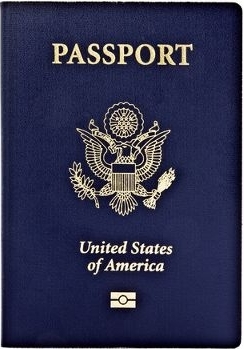
U.S. Passport
Nearly a month in Roxbury and we haven’t managed to get a mailbox mounted. So we went to the Post Office to collect our mail, where it seems the post mistress knows everyone in town. As newcomers, she told us that we could get our passports and even our passport photos at the Roxbury P.O., which seemed like a rather odd thing to mention.

“You look like travelers,” she said, which seemed like a compliment. We didn’t disabuse her of this notion or mention that we were stick-in-the-mud home bodies. Though perhaps we should take this as prophecy. We really are travelers and just didn’t know it!

Time to dust off the old passports and head for the airport. But first, we better start packing. And what about the dogs, and the plants, and all of the things in the refrigerator likely to go bad, …?